
Replacing a boiler is one of the biggest home improvement decisions you will make. It is also one of the least glamorous. Nobody posts about their new boiler on social media. But the system that heats your home through Long Island winters deserves serious attention, and making the right choices now can save you thousands of dollars in fuel costs, repairs, and premature replacements over the next 20 years.
This guide walks you through the entire process from start to finish: how to know if you need a replacement, how to choose the right boiler, how to select a contractor, what to expect during installation, and how to care for your new system afterward. We have been doing this on Long Island since 1979, and this is everything we wish every homeowner knew before picking up the phone.
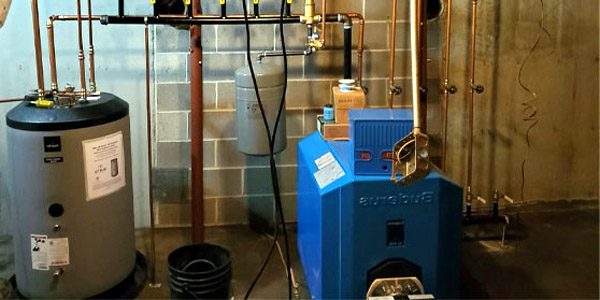
Step 1: Do You Actually Need a Replacement?
Before spending $5,000 to $14,000 on a new boiler, make sure you actually need one. Not every problem requires a full replacement. Sometimes a $300 repair is the right call. Other times, pouring money into repairs is throwing good money after bad.
You likely need a replacement if your boiler is over 20 years old, if repair costs have exceeded $2,000 in the last two years, if the heat exchanger is cracked, if replacement parts are no longer available, or if your carbon monoxide detector has alarmed and the boiler was confirmed as the source. You likely do not need a replacement if the boiler is under 15 years old, the issue is a single replaceable component (thermostat, circulator pump, zone valve), and the repair cost is under $1,000.
For a detailed breakdown of warning signs, read our 10 signs it is time to replace your boiler. For help with the repair vs. replace decision specifically, visit our repair vs. replace guide.
Step 2: Understand the Boiler Types
Not all boilers are the same, and the right type for your home depends on your existing heating distribution system, fuel availability, and efficiency goals. Here is a quick comparison of the types we install on Long Island.
| Boiler Type | Fuel | Efficiency (AFUE) | Best For | Cost Range |
|---|---|---|---|---|
| Gas (Standard) | Natural Gas | 82-89% | Budget-friendly replacement | $5,000 - $8,000 |
| Gas (Condensing) | Natural Gas | 95-98% | Maximum efficiency and savings | $8,000 - $14,000 |
| Oil | Heating Oil | 84-87% | Homes without gas access | $6,000 - $12,000 |
| Steam | Gas or Oil | 80-85% | Homes with radiators and steam piping | $6,000 - $12,000 |
| Hot Water | Gas or Oil | 82-98% | Baseboard or radiant floor systems | $5,500 - $13,000 |
| Combi | Natural Gas | 90-98% | Heating + domestic hot water in one | $5,000 - $10,000 |
For a deep dive into how these stack up against each other and alternative systems like heat pumps, read our boiler types comparison guide. For specific information on any single type, visit our dedicated pages: gas, oil, steam, hot water, or combi.
Condensing vs. Non-Condensing: What Is the Difference?
This is the most important efficiency decision you will make. A non-condensing boiler operates at 80-89% AFUE and vents exhaust gases through a traditional chimney. A condensing boiler recovers extra heat from those exhaust gases before they leave the system, achieving 90-98% AFUE. That recovered heat is what would otherwise go up the chimney as wasted energy.
Condensing boilers cost more upfront but use significantly less fuel. They require PVC venting (instead of a metal chimney liner) and a drain for the acidic condensate they produce. On Long Island, many homeowners save $300 to $800 per year switching from an old standard-efficiency boiler to a new condensing unit. The payback period is typically 5 to 8 years, after which the savings are pure profit.
Step 3: Get the Sizing Right
This is where many boiler replacements go wrong. An oversized boiler wastes fuel and short-cycles (turns on and off rapidly), which stresses components and shortens the system lifespan. An undersized boiler runs constantly and cannot adequately heat your home on the coldest days.
Proper sizing requires a heat loss calculation that takes into account your home square footage, insulation type and thickness, window area and glazing type, ceiling height, number of exterior walls, air infiltration rate, and the local Long Island climate (design temperature of approximately 10-15 degrees Fahrenheit).
Do not accept a quote from any contractor who sizes a boiler by looking at what you have now and saying "we will just install the same size." Homes change over time. If you have added insulation, replaced windows, or finished a basement since the original boiler was installed, you may actually need a smaller unit. Installing the same oversized boiler wastes your money twice: once on the higher equipment cost and again every month on wasted fuel.
A Note on BTU Ratings
Boilers are rated in BTU (British Thermal Units) per hour. A typical Long Island home needs somewhere between 60,000 and 150,000 BTU depending on size and construction. But the input BTU rating on the boiler is not the same as the output. A boiler rated at 100,000 BTU input with 95% efficiency delivers 95,000 BTU of actual heat. This is why efficiency ratings matter so much in the sizing discussion.
Step 4: Choose the Right Contractor
The contractor you choose matters as much as the boiler itself. A good boiler installed poorly will underperform, break down sooner, and may even be unsafe. Here is how to evaluate contractors on Long Island.
Signs of a Good Contractor
- Licensed master plumber in New York State
- Carries liability and workers compensation insurance
- Pulls permits and schedules inspections
- Provides a detailed written estimate
- Performs a heat loss calculation for sizing
- Explains options without pressure to decide immediately
- Has verifiable reviews and references
Red Flags to Watch For
- Verbal-only estimates with no written breakdown
- "We do not need a permit for this"
- Pressure to sign a contract on the spot
- Sizes the boiler based on "what you have now"
- Cannot show proof of license or insurance
- Quote is dramatically lower than all others
- Demands full payment upfront
Step 5: Understand the Quote
A good estimate should be written, itemized, and clear. Before signing anything, make sure you understand exactly what is and is not included. Here is what a complete boiler replacement quote should contain.
Get at least two or three quotes so you can compare scope, not just price. The cheapest quote is rarely the best value if it excludes permits, uses a lower-quality boiler, or does not include removal of the old unit. For a detailed breakdown of what things cost, visit our boiler replacement cost guide.
Step 6: What It Costs
Here is a quick overview of what Long Island homeowners typically pay for a full boiler replacement, including the unit, labor, materials, removal, and permits.
Typical Replacement Costs (Fully Installed)
Includes boiler, labor, basic materials, old boiler removal, and permit fees. Additional costs may apply for chimney relining, piping modifications, or fuel conversions. See full cost guide
Financing options are available for homeowners who need to spread the cost over time. High-efficiency installations may also qualify for utility rebates from National Grid or PSEG Long Island, typically $300 to $1,000 or more depending on the efficiency rating.
Step 7: Permits and Code Requirements
Every boiler installation on Long Island requires a mechanical permit from your local town or village building department. This is a New York State requirement, and it exists to protect you. A permitted and inspected installation means the work was verified by a third-party inspector, which matters for insurance coverage, safety, and home resale value.
Your contractor should handle the entire permit process, including filing the application, paying the fee, and scheduling the inspection after installation. If a contractor tells you a permit is not necessary, find a different contractor. Unpermitted work can create problems with your homeowner insurance and make selling your home significantly more difficult.
The permit fee is typically $75 to $200 on Long Island and should be included in your quote. The inspection is scheduled after the installation is complete and usually takes about 30 minutes. For more details, see the permits section of our installation page.
Step 8: What to Expect on Installation Day
Knowing what happens on installation day eliminates surprises. Here is the typical timeline for a residential boiler replacement.
Morning: Old Boiler Removal
The crew arrives, protects your floors and work area, disconnects the old boiler from all piping, fuel, and venting connections, drains the system (for hot water boilers), and removes the old unit. Most old boilers are taken out in the first 2-3 hours.
Late Morning: Preparation and Piping
Any necessary piping modifications, new venting runs, or chimney work is completed. If you are switching from a standard to a condensing boiler, new PVC venting is installed and a condensate drain is connected.
Afternoon: New Boiler Installation
The new boiler is set in position, leveled, and connected to all supply and return piping, the fuel line, the exhaust vent, the thermostat and zone controls, and the domestic hot water loop if applicable.
Late Afternoon: Fill, Test, and Commission
The system is filled with water, bled of air, and pressurized. The boiler is fired up and the technician checks ignition, flame quality, gas pressures (or oil combustion), all heating zones, safety controls, and system temperatures. Everything is tested before anyone leaves.
Before Leaving: Walkthrough and Cleanup
The crew walks you through the operation of your new system, explains the thermostat controls, reviews the warranty, and answers any questions. All debris, packaging, and the old boiler are removed. Your space is left clean.
Most standard replacements are completed in a single day. Complex jobs involving fuel conversions, extensive piping modifications, or chimney relining may take two days. You will be without heat during the installation, so plan accordingly. If this is a winter installation, portable electric space heaters can keep key rooms comfortable during the work.
Step 9: After Installation Care
Your new boiler is an investment that should last 15 to 25 years or more with proper care. Here is what you should do after the installation to protect that investment.
For a complete maintenance guide, read our boiler maintenance tips article.
Step 10: Consider Alternatives
A boiler-for-boiler replacement is the most common path, but it is not the only one. Depending on your situation, you may want to consider these alternatives.
Oil to gas conversion: If you currently have an oil boiler and natural gas is available on your street, switching to gas can lower your fuel costs significantly and eliminate oil deliveries, tank maintenance, and the environmental risks of an aging oil tank. Learn more on our oil to gas conversion page.
Heat pump: For homeowners interested in electrification, heat pumps (especially ductless mini-splits) can provide both heating and cooling from a single system. They work well as a primary heating source or as a supplement to a smaller boiler. See our boiler to heat pump conversion page for details.
Combi boiler upgrade: If you currently have both a boiler and a separate hot water heater, a combi boiler can replace both in a single wall-mounted unit. This saves space and eliminates the maintenance and replacement cost of a separate water heater. Visit our combi boiler page for more information.
Ready to Get Started?
The first step is always a free in-home assessment. We will inspect your current system, evaluate your home heating needs, discuss your options, and provide a detailed written estimate with no obligation and no pressure. Whether you end up choosing us or not, you will leave the conversation better informed about what your home needs.
Call us at (631) 860-6681 or schedule your free estimate online. We are available 7 days a week, 7 AM to 9 PM.