
Expert hydronic boiler replacement for baseboard, radiator, and radiant floor systems across Nassau and Suffolk County. Standard and high-efficiency condensing options.
Hot water (hydronic) boilers are the most common type of heating system on Long Island. A hot water boiler heats water and circulates it through baseboard heaters, cast iron radiators, or radiant floor tubing using a circulator pump. Unlike steam boilers that generate pressurized steam, hydronic systems operate at lower temperatures and pressures, providing quieter, more even heating with better zone control. If your hot water boiler is aging or failing, a modern replacement can dramatically improve both comfort and fuel efficiency.
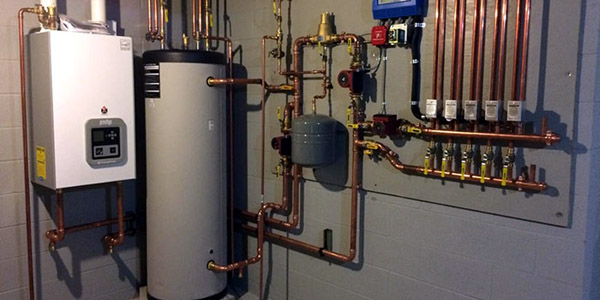
Modern hot water boilers are available in two main efficiency tiers. Standard efficiency models operate at 80-89% AFUE with traditional chimney venting. High-efficiency condensing models achieve 95-98% AFUE by recovering heat from exhaust gases and venting through PVC pipe. Condensing boilers deliver the greatest efficiency gains when paired with lower-temperature distribution systems like baseboard or radiant floor heating, because the lower return water temperature allows the boiler to condense more exhaust heat.
Hot water boilers also offer the most flexibility of any boiler type. They work with multiple zone valves for room-by-room temperature control, can power an indirect water heater for domestic hot water, and are compatible with outdoor reset controls that automatically adjust water temperature based on outside conditions. These features make hydronic boilers the preferred choice for new construction and major renovations on Long Island.
Choosing between standard and condensing is the most important decision for a hot water boiler replacement. Your existing distribution system and how long you plan to stay in your home should guide the choice.
| Feature | Standard Efficiency | High-Efficiency Condensing |
|---|---|---|
| AFUE Rating | 80 – 89% | 95 – 98% |
| Installed Cost | $7,990 – $9,400 | $8,500 – $11,900 |
| Equipment Only | $4,200 – $5,100 | $3,500 – $8,000 |
| Venting | Traditional chimney | PVC pipe (direct vent) |
| Annual Fuel Savings | Baseline | 20 – 35% less than standard |
| Best With | Any distribution type | Baseboard, radiant floor (lower return temps) |
| Rebate Eligible | Usually not | Yes (National Grid, federal 25C credit) |
| Lifespan | 20 – 30 years | 15 – 20 years |
A condensing boiler achieves its highest efficiency when the return water temperature stays below 130 degrees Fahrenheit. Baseboard and radiant floor systems typically operate in this range, making them ideal for condensing technology. Homes with cast iron radiators often run at higher temperatures, which reduces the condensing advantage. We evaluate your distribution system and recommend the option that delivers the best return on investment. For a full comparison of all types, see our boiler types comparison guide.
| Distribution Type | Operating Temp | Condensing Benefit | Notes |
|---|---|---|---|
| Baseboard Heaters | 140 – 180°F | Good (with outdoor reset) | Most common on LI. Works well with both standard and condensing. |
| Cast Iron Radiators | 160 – 180°F | Moderate | Higher temps reduce condensing advantage. Standard may be better value. |
| Radiant Floor | 85 – 130°F | Excellent | Low temps maximize condensing efficiency. Ideal pairing. |
| Fan Coil Units | 140 – 180°F | Good | Common in multi-zone applications. Works with both types. |
| Brand | Standard (Installed) | Condensing (Installed) | Highlights |
|---|---|---|---|
| Weil-McLain | $8,200 – $9,800 | $8,500 – $9,600 | CGa, ECO Tec, WM97+, Evergreen. Industry standard. |
| Navien | N/A (condensing only) | $8,000 – $9,000 | NHB series. Wall-hung, compact. WiFi-enabled. 95% AFUE. |
| Burnham | $8,200 – $8,900 | $8,000 – $9,000 | Series 2, Alpine, K2 condensing. Broad lineup. |
| Buderus | $8,500 – $9,500 | $8,500 – $9,000 | GB142 and GB162 condensing. German engineering. Premium. |
| Bosch | N/A (condensing only) | $8,500 – $9,500 | Greenstar series. Quiet, wall-mounted. 95% AFUE. |
| Peerless | $8,500 – $9,000 | $8,200 – $9,500 | PureFire series (condensing). Cast iron standard models. |
| New Yorker | $8,400 – $9,000 | $9,000 – $9,500 | CL series. American-made. Solid value across the lineup. |
| PurePro Advantage | $8,100 – $8,800 | $7,900 – $8,900 | AG and AO series. Installer-ready. Taco 007e circulator and HydroStat control included. Gas and oil models. |
All prices shown are equipment only. Total installed cost depends on the model, BTU rating, fuel type, and installation complexity. For a full cost breakdown, see our boiler replacement cost guide.
An indirect water heater uses your boiler to heat your domestic hot water, eliminating the need for a separate gas or electric water heater. A coil inside the tank circulates boiler water, transferring heat to the stored domestic water. This is one of the most efficient ways to produce hot water for your home.
Benefits: Higher recovery rate than a standard water heater, lower operating cost because the boiler is already running, no separate flue or venting required, and longer lifespan than a standalone water heater (many indirect tanks carry 10 to 12 year warranties).
Cost: Adding an indirect water heater during boiler replacement typically costs $1,200 to $3,000 for the tank and installation. Popular brands include Weil-McLain, Amtrol (BoilerMate), Bradford White, and Triangle Tube.
Boiler replacement is the ideal time to add an indirect water heater because the piping connections are already being installed. We recommend this upgrade for most hydronic boiler projects.
Proper sizing based on your home, insulation, windows, and the Long Island climate zone.
Complete disconnection, draining, and removal of the existing hot water boiler.
All supply and return piping, zone valves, and chimney or PVC venting for condensing units.
Required mechanical permit and post-installation building department inspection.
New or upgraded circulators as needed for proper flow across all heating zones.
Combustion analysis, zone-by-zone testing, air purging, and homeowner walkthrough.
Homeowners sometimes confuse hot water and steam systems. Here is a quick comparison to clarify the differences.
| Feature | Hot Water (Hydronic) | Steam |
|---|---|---|
| Distribution | Circulator pump pushes water through pipes | Steam pressure pushes steam through pipes |
| Temperature | 140 – 180°F (lower for radiant) | 212°F+ (boiling point) |
| Zone Control | Excellent (zone valves per area) | Limited |
| Noise Level | Very quiet | Clanking, hissing possible |
| Efficiency Range | 80 – 98% AFUE | 80 – 85% AFUE |
| Condensing Available | Yes (95 – 98% AFUE) | No |
| Indirect DHW | Yes (common upgrade) | Possible but less efficient |
If you currently have a steam system and want to learn more about your options, see our steam boiler replacement page. Converting from steam to hot water requires replacing all the piping in your home, which typically costs $15,000 to $30,000+ and is rarely cost-effective compared to replacing the steam boiler.
A well-maintained hot water boiler typically lasts 15 to 25 years, with cast iron models lasting up to 30 years in some cases. Signs that replacement is approaching include rising fuel bills despite similar usage, repair costs exceeding $1,500 in a single year, visible corrosion or leaks on the boiler body, inconsistent temperatures across zones, frequent air in the system requiring purging, and a boiler age of 15 years or more. For a detailed guide, see 10 signs it is time to replace your boiler or use our repair vs. replace decision guide.
Every hot water boiler replacement begins with a free in-home assessment. We evaluate your distribution system, perform a heat loss calculation, discuss standard vs. condensing options, and provide a detailed written estimate with no obligation. Call (631) 860-6681 or schedule online.
Schedule a free in-home assessment. We will evaluate your system, calculate your heating needs, and provide a detailed written estimate with no obligation.