
Boiler vs. Furnace: Understanding the Difference
Before deciding whether to replace your boiler with a furnace, it helps to understand what each system does and how they work differently. Boilers heat water and distribute that heat through radiators, baseboards, or radiant floor tubing. Furnaces heat air and push it through a network of ducts and vents throughout your home. Both systems can run on natural gas, oil, or propane, and both can keep your home warm. But they do it in fundamentally different ways, and that difference has real implications for comfort, cost, and what is involved in making the switch.
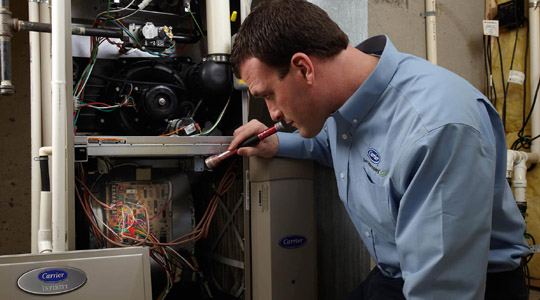
Most Long Island homes built before the 1980s use boiler systems with cast iron radiators or baseboard convectors. These homes were designed around hydronic (water-based) heat distribution and do not have ductwork. Newer homes and those in developments built from the 1990s onward are more likely to have forced-air systems with existing ductwork. Understanding what your home currently has is the first and most important factor in this decision.
Side-by-Side Comparison: Boiler vs. Furnace
Here is how boilers and furnaces compare across the factors that matter most to Long Island homeowners.
| Factor | Boiler System | Furnace (Forced Air) |
|---|---|---|
| Heat Distribution | Water via radiators/baseboard | Heated air via ducts/vents |
| Comfort Quality | Even, radiant, no drafts | Can feel drafty, less even |
| Noise Level | Very quiet | Blower noise, duct noise |
| Humidity | Retains natural humidity | Dries out air (humidifier recommended) |
| Central AC Compatible | No (needs separate system) | Yes (shares ductwork) |
| Air Filtration | None built in | Filters air through returns |
| Equipment Lifespan | 20 - 30 years | 15 - 20 years |
| Efficiency (AFUE) | 85 - 98% | 80 - 98% |
| Maintenance | Annual inspection + cleaning | Filter changes + annual tune-up |
| Freeze Risk | Pipes can freeze if system fails | No water in system |
Pros and Cons of Switching to a Furnace
There are legitimate reasons to consider a furnace, and there are significant drawbacks. Here is an honest breakdown.
Pros of a Furnace
- Ductwork enables central air conditioning
- Built-in air filtration through duct system
- No freeze risk from water in pipes
- Heats up rooms faster than radiators
- Furnace equipment costs less than a boiler
- Easier to find service technicians
Cons of Switching
- Ductwork installation is extremely expensive ($10K-$20K+)
- Major construction: walls, ceilings, closets opened up
- Forced air dries out indoor air in winter
- Noisier than boiler heat (blower + duct noise)
- Less even heat, potential for hot/cold spots
- Shorter equipment lifespan than most boilers
What Does a Boiler-to-Furnace Conversion Actually Cost?
This is the number that changes most homeowners' minds. Replacing a boiler with another boiler is a straightforward job that reuses your existing piping distribution. Converting to a furnace requires installing ductwork throughout your entire home, which is a major construction project.
Conversion Cost Breakdown (Long Island)
Compare this to a boiler replacement, which typically costs $5,000 to $15,000 including the new unit and installation, reusing your existing distribution system. The ductwork is the major cost driver in a furnace conversion.
The ductwork cost varies enormously depending on your home's layout. A ranch with an accessible basement and attic is easier to duct than a two-story colonial with finished ceilings and limited chase space. In many older Long Island homes, routing ductwork cleanly requires soffits, bulkheads, or opening up walls, all of which add drywall and finishing costs on top of the HVAC work.
For a detailed look at boiler replacement costs, visit our complete cost guide.
The Ductwork Challenge in Older Long Island Homes
This is the single biggest obstacle to a boiler-to-furnace conversion and the reason most HVAC contractors (including us) will tell you honestly that it rarely makes financial sense. The vast majority of Long Island homes with boiler heat were built without any provisions for ductwork. There are no chases, no plenums, no return air paths built into the walls or floors.
Installing ductwork in these homes means running supply trunks and branch ducts through the basement ceiling, building soffits in first-floor rooms to conceal the runs, and finding ways to get supply ducts up to second-floor rooms, often through closets or by creating bulkheads along walls. Return air is even more challenging, since it requires large ducts back to the furnace from every floor.
The result is weeks of construction, drywall work, painting, and disruption to your daily life. In some homes, particularly those with low basement ceilings, slab-on-grade construction, or heavily finished basements, routing ductwork is simply not practical without major compromises to living space.
When a Furnace Conversion Does Make Sense
Despite the challenges, there are specific situations where converting from a boiler to a furnace is worth considering.
Consider a Furnace If...
Furnace May Be RightYou are doing a major gut renovation where walls and ceilings will already be opened up, making ductwork installation far less disruptive and expensive.
Your home already has partial ductwork from a central AC installation, which reduces the scope of new duct runs significantly.
You are adding a large addition and want a unified heating and cooling system for the entire home.
Your existing radiators or baseboard are badly corroded and the entire distribution system needs replacement anyway.
Keep Your Boiler If...
Recommended for Most HomesYour home has no existing ductwork and you are not planning a major renovation. The ductwork cost alone exceeds a full boiler replacement.
You value quiet, even, draft-free heat. Boiler heat is widely considered more comfortable than forced air.
Your home's layout makes ductwork routing difficult or would require significant soffits and bulkheads that compromise room aesthetics.
You simply need to replace an aging boiler. A modern high-efficiency boiler costs a fraction of a full system conversion.
Want Central AC Without a Furnace?
The most common reason homeowners consider a furnace is that they want central air conditioning and believe they need ductwork to get it. That is no longer true. Ductless mini-split heat pumps provide whole-home heating and cooling without any ductwork at all. They mount on walls or ceilings, connect to an outdoor unit, and give you room-by-room temperature control.
For most Long Island homes with boiler heat, a ductless system is the fastest, most cost-effective way to add cooling while keeping your existing boiler for heat. Or, you can go all-in and let the heat pump handle both heating and cooling. Either way, you skip the ductwork entirely.
Learn more on our boiler to heat pump conversion page.
What the Conversion Process Involves
If your situation does call for a furnace conversion, here is what the project looks like from start to finish.
In-Home Assessment and Duct Design
We evaluate your home's layout, measure rooms, check basement ceiling height and accessibility, and design a duct system that delivers proper airflow to every room while minimizing visual impact. We perform a Manual J load calculation to size the furnace correctly.
Detailed Written Estimate
You receive a comprehensive estimate covering the furnace, all ductwork, registers, old system removal, and any necessary drywall/finishing work. No surprises. We walk you through every line item.
Permits and Scheduling
We pull all required mechanical permits from your municipality in Nassau or Suffolk County. The project is scheduled to minimize disruption, and we coordinate any subcontractors needed for drywall or electrical work.
Ductwork Installation
This is the most time-intensive phase. Our crew routes supply and return ducts through the basement, builds any required soffits or bulkheads, and cuts register openings. Trunk lines, branch runs, and transitions are all sealed and insulated to maximize efficiency.
Furnace Installation and Connection
The new furnace is installed, connected to the gas line (or oil supply if staying with oil), wired to the thermostat, and connected to the new duct system. Venting is routed through the chimney or through the wall depending on the furnace type.
Old Boiler and Radiator Removal
We disconnect and remove the old boiler, drain the hydronic piping, and remove radiators or baseboard units from every room. Piping is capped off in the walls or removed if accessible.
Testing, Balancing, and Inspection
We fire up the system, check airflow at every register, balance the system so each room gets the right amount of heat, and schedule the municipal inspection. We walk you through thermostat operation and filter maintenance before we leave.
A full boiler-to-furnace conversion typically takes 5 to 10 business days of on-site work, depending on the home's size and complexity. With drywall and finishing, the total project timeline is usually 2 to 4 weeks.
What About Your Hot Water?
If your boiler currently provides domestic hot water through an indirect water heater (a separate insulated tank connected to the boiler), you will need a new hot water solution when the boiler is removed. The most common options are a standalone gas water heater (traditional tank or tankless), which is added as part of the conversion project. We include this in the estimate and plan so your hot water is not interrupted.
If your home has a separate standalone water heater that is not connected to the boiler, no changes to your hot water system are needed.
Better Alternatives for Most Homeowners
For the majority of Long Island homeowners whose boiler needs replacement, the most cost-effective and practical options do not involve a furnace conversion at all.
Replace the boiler with a modern high-efficiency boiler. A new condensing gas boiler (95-98% AFUE) provides the same comfortable radiant heat you are used to, costs $5,000 to $15,000 installed, and reuses your entire existing distribution system. No construction, no ductwork, and completed in 1 to 2 days. For most homeowners, this is the clear winner. Visit our gas boiler replacement page for details.
Add a ductless mini-split for cooling. If your main motivation for considering a furnace is central AC, a ductless heat pump system gives you room-by-room cooling (and supplemental heating) for $3,000 to $8,000 per zone, with no ductwork required. Learn more on our heat pump conversion page.
Convert from oil to gas. If you are currently on oil and want to lower your fuel costs, an oil-to-gas conversion saves 25-40% on heating costs and is far less invasive than switching to a furnace.