
No chimney, no combustion, no emissions. Electric boiler replacement and installation for homes where gas is unavailable or where solar panels offset electricity costs.
Interest in electric boilers is growing on Long Island as homeowners explore alternatives to gas and oil heating. An electric boiler uses heating elements immersed in water to provide hydronic heat through baseboard heaters, radiators, or radiant floor systems. Because there is no combustion, electric boilers require no chimney, flue, or venting of any kind. They produce zero on-site emissions, operate virtually silently, and achieve 99%+ efficiency since there is no heat lost through exhaust.
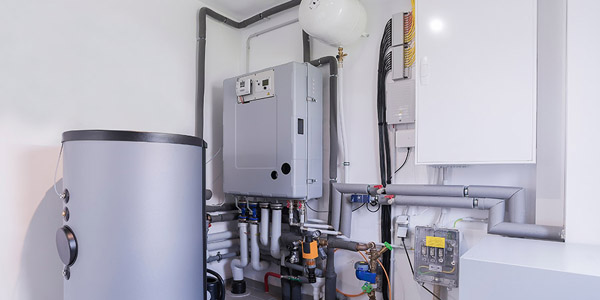
However, electric boilers are not the right choice for every Long Island home. The most important consideration is operating cost. PSEG Long Island electricity rates are among the highest in the nation, which means running an electric boiler as the primary heat source for a large home can be significantly more expensive per month than gas or oil. Electric boilers make the most financial sense for smaller homes, supplemental heating zones, homes without gas access, and homeowners with solar panel systems that offset electricity costs.
We install and replace electric boilers across Nassau and Suffolk County and can help you determine whether electric is a practical fit for your home, budget, and energy goals. For homeowners looking for an electric alternative with lower operating costs, we also offer heat pump systems, which use electricity far more efficiently than resistance heating.
This is the comparison most homeowners need when evaluating an electric boiler. Equipment cost is lower for electric, but operating cost is the key difference.
| Feature | Electric Boiler | Gas Boiler | Oil Boiler |
|---|---|---|---|
| Equipment Cost | $3,500 – $5,000 | $3,900 – $8,000 | $4,200 – $8,500 |
| Installed Cost | $7,500 – $8,500 | $7,990 – $9,890 | $7,990 – $9,990 |
| Efficiency | 99%+ | 80 – 98% AFUE | 84 – 87% AFUE |
| Annual Operating Cost* | $2,800 – $5,000 | $1,200 – $1,800 | $2,500 – $3,500 |
| Venting Required | None | Chimney or PVC | Chimney |
| On-Site Emissions | None | Yes (CO, NOx) | Yes (CO, NOx, SO2) |
| Maintenance | Minimal | Annual tune-up | Annual tune-up + filter/nozzle |
| Lifespan | 15 – 25 years | 15 – 30 years | 20 – 25 years |
| Noise Level | Virtually silent | Quiet | Moderate (burner noise) |
*Annual operating costs are estimates for a typical 1,500 sq ft Long Island home based on 2025-2026 PSEG Long Island, National Grid, and heating oil prices.
No chimney, flue, or venting required
99%+ efficiency (no combustion heat loss)
Zero on-site emissions
Virtually silent operation
Minimal maintenance (no annual combustion tune-up)
Compact size, flexible placement
Lower equipment and installation cost
Ideal pairing with solar panel systems
High electricity rates (PSEG LI averages $0.24 – $0.30/kWh)
Operating cost 2 – 3x higher than gas without solar
May require electrical panel upgrade (200A minimum)
Limited BTU output for larger homes
Does not qualify for gas utility rebates
Slower heat recovery than combustion boilers
Solar panel owners: If you generate enough solar electricity to offset heating costs, an electric boiler can run at near-zero fuel cost during the day and low cost with net metering credits.
Homes without gas access: Parts of eastern Suffolk County have no natural gas service. An electric boiler avoids the ongoing cost and hassle of oil deliveries and oil tank maintenance.
Smaller homes and condos: Homes under 1,200 square feet with moderate heating demand can be heated electrically at a reasonable monthly cost.
Supplemental zones: An electric boiler can heat an addition, converted garage, in-law suite, or finished basement without extending the main boiler system.
Chimney elimination: If your existing chimney is deteriorating and would require costly relining ($2,000 to $5,000), an electric boiler eliminates that expense entirely.
Electric boilers draw significant amperage. A typical residential electric boiler rated at 12 to 36 kW requires a 200-amp electrical panel at minimum, and larger units may require a panel upgrade to 400 amps. Many older Long Island homes still have 100-amp or 150-amp panels that cannot support an electric boiler without an upgrade.
Panel upgrade cost: If your home requires an electrical panel upgrade, expect to add $1,500 to $4,000 to the project total. We coordinate with licensed electricians to assess your panel capacity and handle any required upgrades as part of the installation.
Electric boilers also require a dedicated circuit (typically 240V) run from the panel to the boiler location. This wiring is included in the installed cost quoted above.
| Brand | Equipment Price | kW Range | Highlights |
|---|---|---|---|
| Electro Industries | $2,900 – $5,000 | 7 – 45 kW | EB-S and EB-MS series. Most popular electric boiler in the US. Made in Minnesota. Wide range of sizes. |
| SlantFin | $2,800 – $3,500 | 7 – 30 kW | Monitron series. Compact, wall-mounted. Built-in circulator pump on select models. |
| Thermolec | $2,500 – $3,000 | 5 – 36 kW | TMB series. Canadian-made. Value-priced. Good for supplemental zones. |
| Bosch | $3,500 – $4,500 | 4 – 27 kW | Tronic Heat series. German engineering. Compact design. Step modulation. |
| Eemax | $2,500 – $3,500 | 8 – 27 kW | HA Series. Tankless electric technology applied to hydronic heating. Lightweight. |
All prices shown are equipment only. Total installed cost depends on the model, kW rating, electrical work required, and whether a panel upgrade is needed. For a full cost breakdown, see our boiler replacement cost guide.
If you are attracted to electric heating for its zero-emission benefits but concerned about operating costs, a heat pump is worth serious consideration. Heat pumps use electricity to move heat rather than generate it, making them 2 to 3 times more efficient than electric resistance heating.
Electric boiler: 1 kWh of electricity = 1 kWh of heat (COP of 1.0).
Heat pump: 1 kWh of electricity = 2.5 to 3.5 kWh of heat (COP of 2.5 to 3.5).
This means a heat pump can heat the same home for roughly one-third the electricity cost of an electric boiler. Heat pumps also provide air conditioning in summer, which an electric boiler does not. The trade-off is higher upfront cost ($12,000 to $25,000 installed) and the need for outdoor equipment. Learn more on our boiler to heat pump conversion page.
Proper sizing in kilowatts based on your home, insulation, and heating demand.
Panel capacity check. Dedicated 240V circuit. Panel upgrade coordination if needed.
Disconnection and removal of the existing boiler, regardless of fuel type.
Supply and return piping to your existing baseboard, radiator, or radiant floor system.
Required mechanical and electrical permits with post-installation inspections.
Element testing, zone verification, pressure testing, and homeowner walkthrough.
Electric boilers typically last 15 to 25 years because they have fewer mechanical components than combustion boilers. Signs that replacement is approaching include heating elements failing one by one (reduced heat output), the boiler tripping the circuit breaker repeatedly, visible corrosion or leaks from the tank, inability to maintain set temperature, and a unit age of 15 years or more with declining performance. For a detailed guide on replacement timing, see 10 signs it is time to replace your boiler or use our repair vs. replace decision guide.
Every electric boiler project begins with a free in-home assessment. We evaluate your heating load, electrical panel capacity, and energy costs to determine whether an electric boiler is the right fit. If it is not, we recommend the best alternative for your situation. Call (631) 860-6681 or schedule online.
Schedule a free in-home assessment. We will evaluate your electrical capacity, heating needs, and operating costs to determine if electric is the right choice.